Blog Posts

MicroDexed-touch DIY Synth/Groovebox

positionhigh has evolved the original MicroDexed port of the popular Yamaha DX7 plugin synth into a fully-blown, self-contained FM synth/sequencer/groovebox!
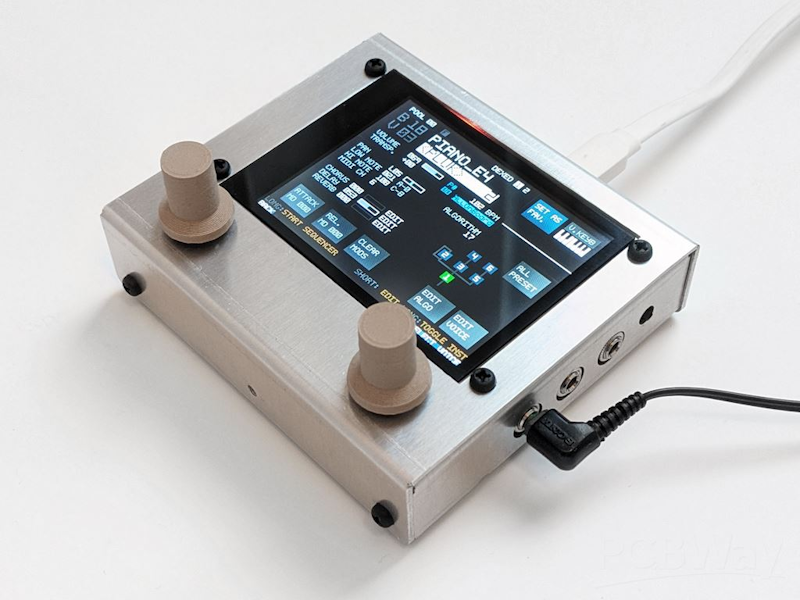
The project combines a Teensy 4.1 with a TI PCM5102A stereo DAC, and a capacitive touch ILI9341 SPI display, plus PSRAM for holding samples. What began as Holger’s project to bring the DX7 sound to Teensy is now a complete workstation, featuring a large, touch-based UI, eight-track, sixteen-step, seven-note polyphonic chain-based and twelve-track four-pattern live sequencers, an eight-voice polyphonic oscillator based on Mutable Instruments’ Braids, and a Euclidean arpeggiator with 1/8-1/64 steps.
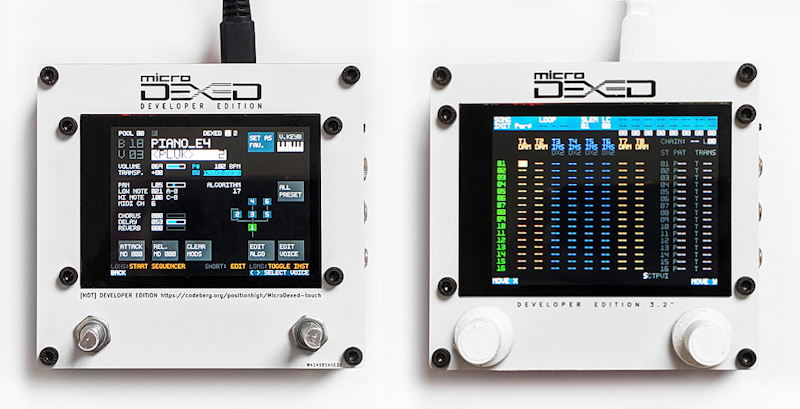
External MIDI devices can be incorporated via USB or mini TRS jacks, including MIDI CC for controlling input/parameters. Samples can be loaded from SD card to PSRAM, the latter of which is also used to add up to 60 seconds of global delay effects. A tracker-styled editor and web-based remote control are in progress.

Code, documentation, STL files for a 3d-printed enclosure, and more can be found in the project’s Codeberg repo, and the PCB can be ordered directly from PCBWay.
DIY Motion Simulator

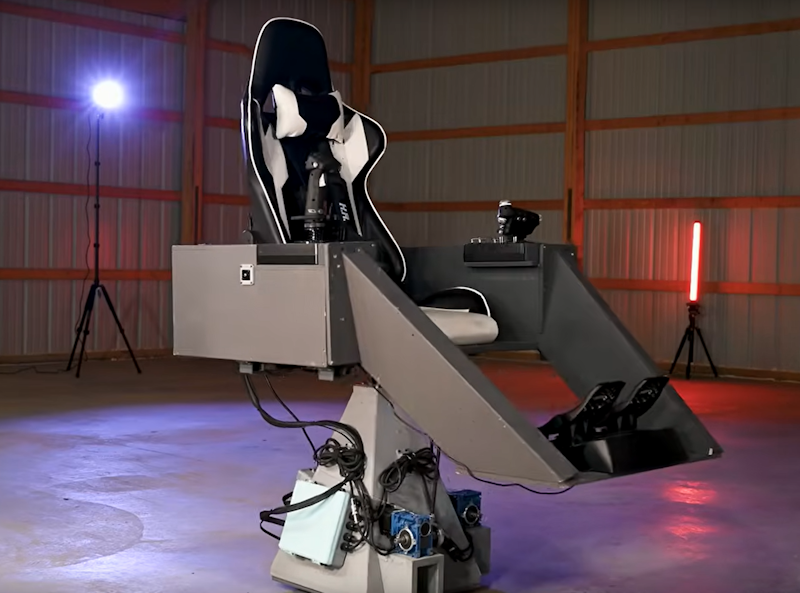
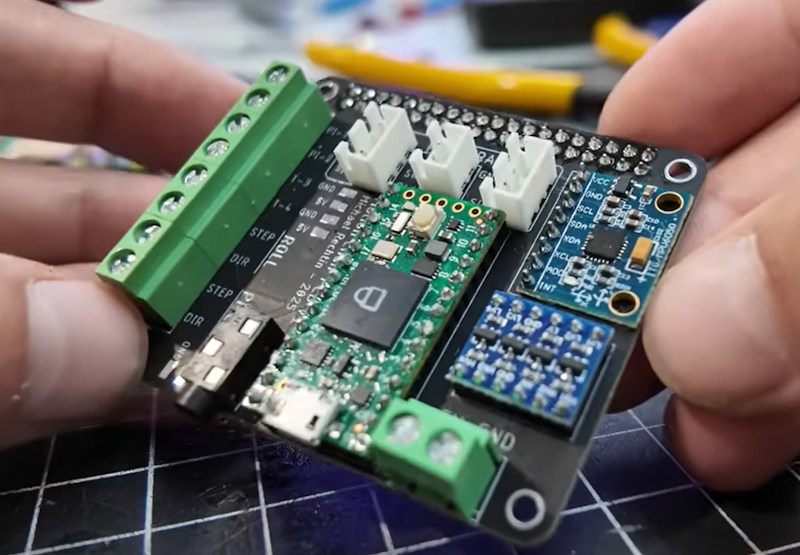
Michael Rechtin is building a DIY Motion Simulator that he hopes will transform computer simulation into a theme-park-like thrill ride with the addition of realistic motion.

Flight simulator enthusiasts will go to great lengths to create the most authentic flying experience, with multiple large monitors surrounding cockpit-like rigs, attached to realistic yokes and pedals.

As impressive as the simulator is, the electronics are quite simple. A Raspberry Pi 4B is connected to USB pilot controls, and in turn uses a Teensy 4.0 to control powerful stepper motors that move the seat. In addition to flight simulator software, the rig can be used with an RC airplane or drone by mounting an MPU6050 IMU on the aircraft, which transmits pitch, roll, and yaw data so that the seat’s orientation can match it.

BOM, code, and extensive documentation can be found on GitHub, and you can see it in action in the video below.

TeensyMix Open-Source Polyphonic Synthesizer

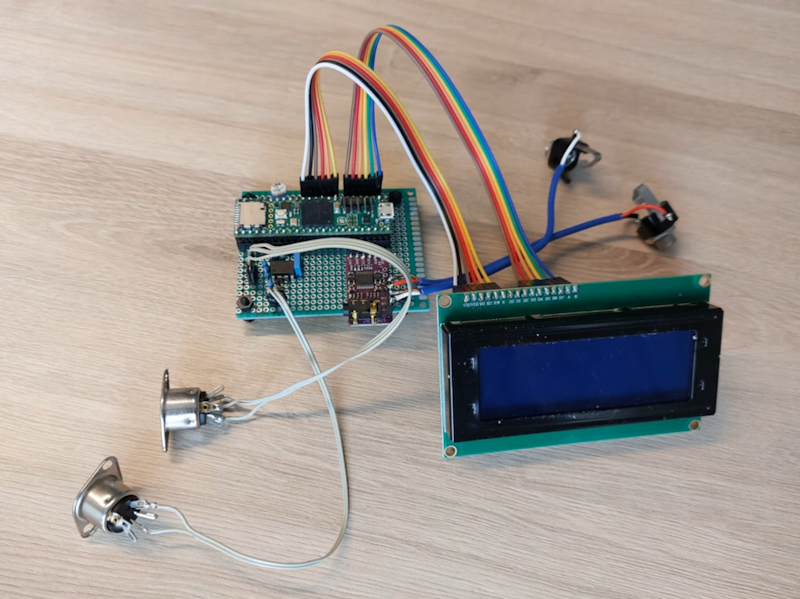
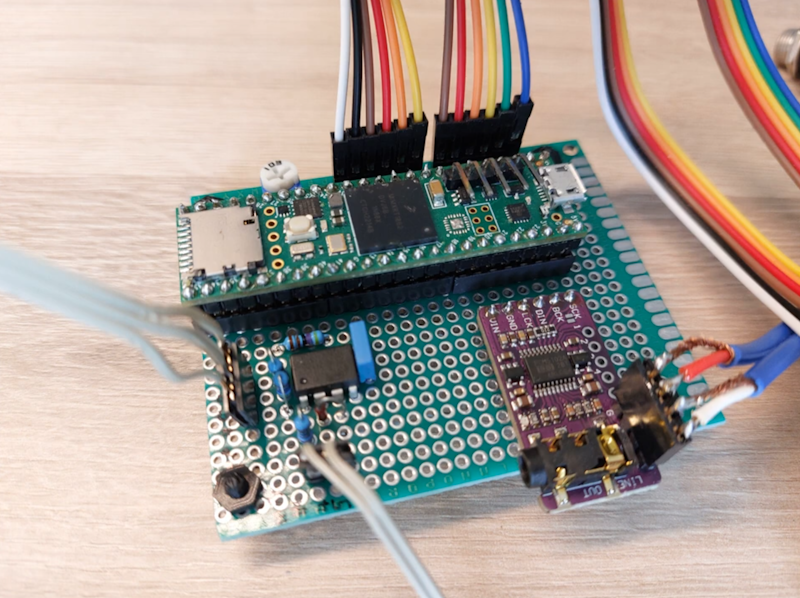
We’ve seen all manner of complicated synth and audio project based around the Teensy 4.1, and which makes GitHub user phjanderson’s TeensyMix synth somewhat unique. Recreating the 8-voice polyphonic synthesizer requires just an LCD display and digital-to-analog converter, with an optional 5-pin DIN for serial MIDI.

In addition to sawtooth, square, sine, triangle, and sample-and-hold noise, the TeensyMix features several sampled waveforms. There are two oscillators per voice, with waveform shape modulation and frequency modulation (FM) respectively. The PCM5102a D/A converter provides 24-bit stereo audio, with USB-MIDI coming via our USB Host Cable (or optionally serial 5-pin DIN via 6N137 Optoisolator).

Source, hardware pinouts, and usage instructions can be found on GitHub, and you can hear it in action in the video below!

80s Megapixel Camera

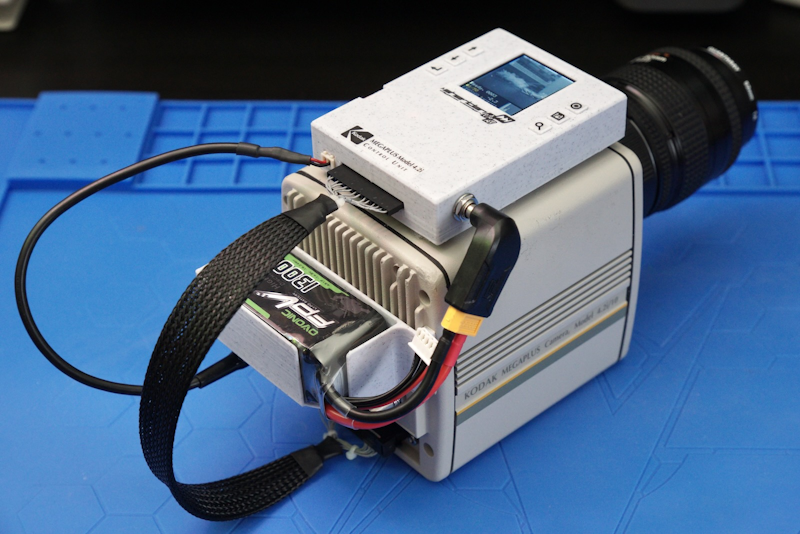
Frost Sheridan endeavored to see what could be done to make a vintage Kodak MegaPlus 4.2i usable by implementing the communication interface and building his own frame grabber gadget.

The first digital camera that I can recall seeing was 0.4MP Kodak that stored 24 images on its built-in memory. This was in the mid-90s, but apparently they were already making megapixel devices almost a decade earlier in the form of the Kodak MegaPlus 4.2i. The $849 1995 Kodak DC40 ($1800 in 2025) already seemed expensive, but the MegaPlus went for as much as $40K in 1986 ($118K today!).

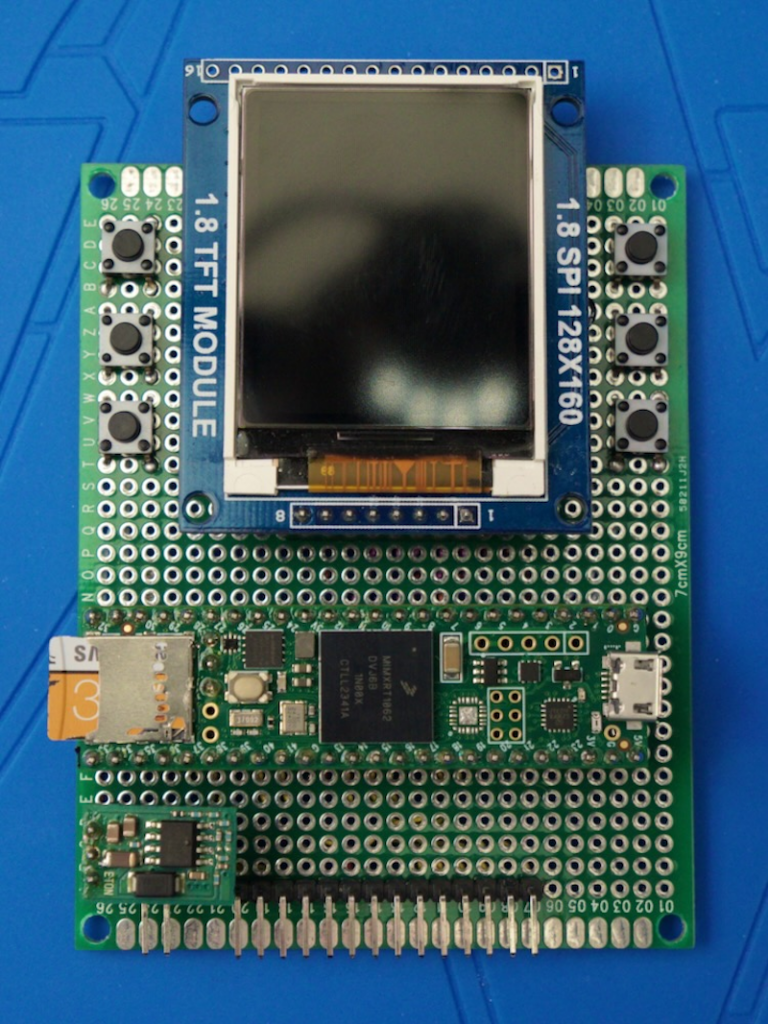
The 68-pin D-sub connector seemed to imply that the missing frame grabber card required for use might use SCSI, but in fact it was custom signaling which just used the same connector. As such, Frost went about creating a Teensy 4.1-based solution, in order to end up with a portable device, unlike the tethered use that the required capture card and computer would have forced in its 80s incarnation.

Despite being nearly four decades old, the MegaPlus transfers images at 100Mbps, requiring a fast microcontroller like the Teensy 4.1, and one with enough RAM to buffer the resultant images, which the Teensy has after an 8MB SPRAM upgrade. The built-in mSD slot also provides a handy place to store images. An ICL3232 serial transceiver chip enables RS-232 communication between the Teensy and MegaPlus, and a 128x160px LCD acts as viewfinder.

Dragon Halloween Costume

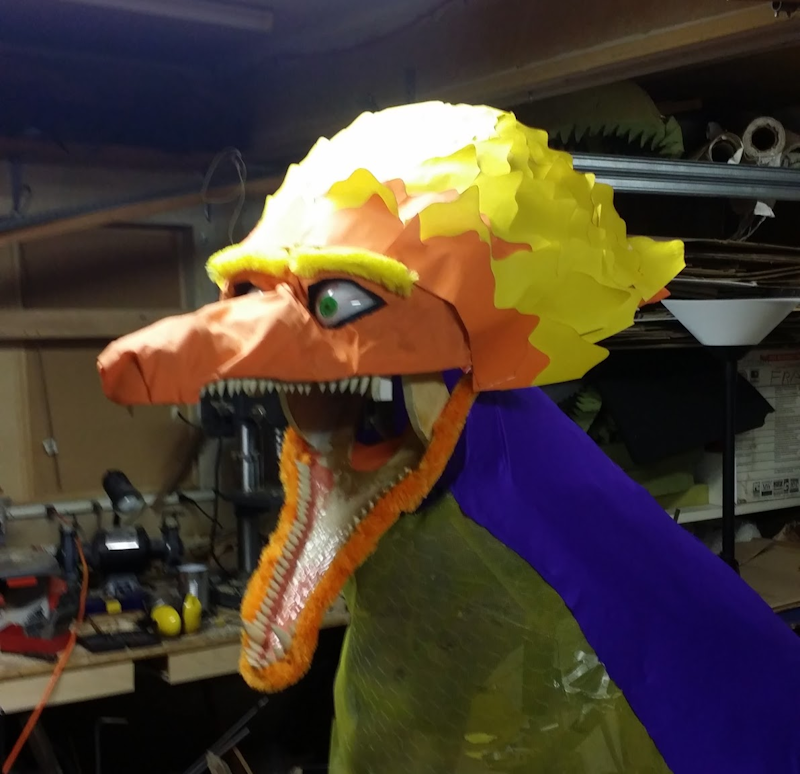
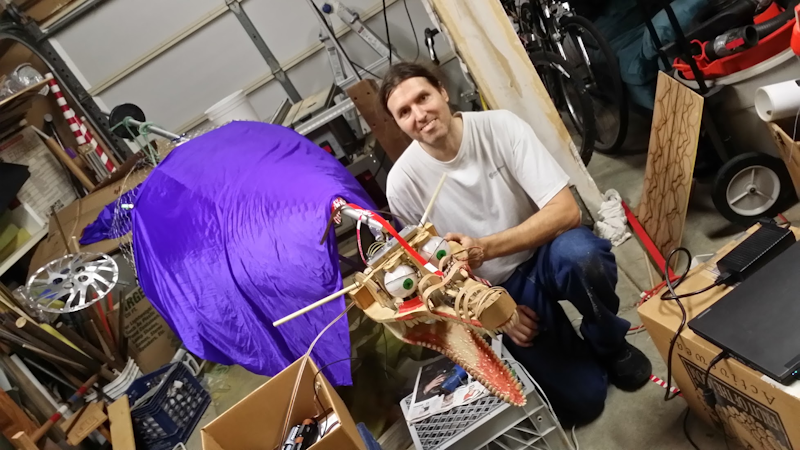
Industry veteran Nathan “Acorn” Pooley likes making costumes for Halloween. And often, this includes an interactive component such as glowing eyes. For the ambitious “Orange Dragon”, a microcontroller was required in order to achieve the desired mechatronic aspects.

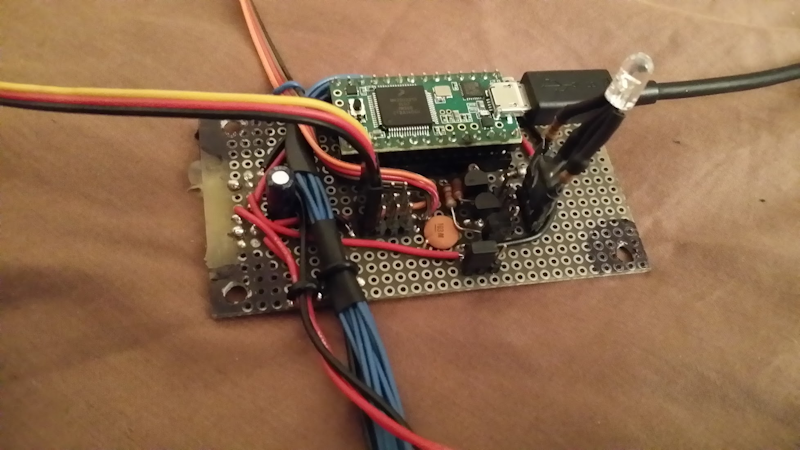
For this, Acorn chose a Teensy 3.1 due to its ease of use and flexibility, resulting in the simultaneously terrifying and endearing dragon.

As a fun bonus, Acorn informed us that Teensy boards were also used in the development of Everyday Robots, as a quick and easy datalogging and debugging tool, which was knocked together in a day, and used in every robot until they finally got the same functionality integrated into their own boards. Check out more behind-the-scenes construction images in this album, as well as this chronicling of several decade’s-worth of costumes.

Reel Feel – Haptic Feedback for Virtual Reality

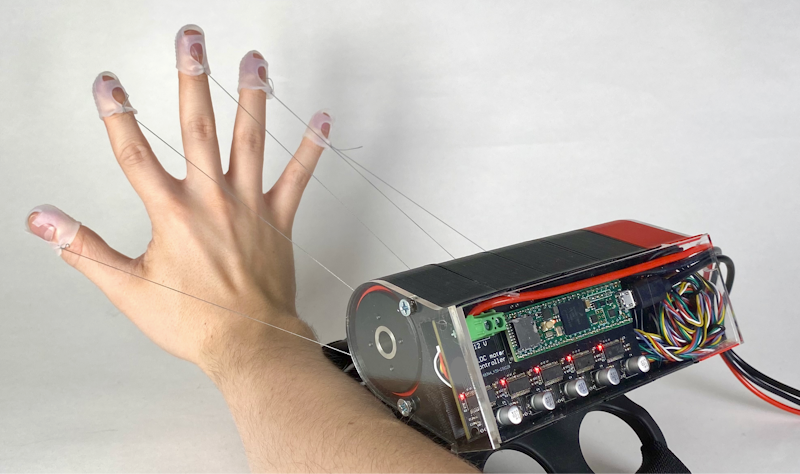
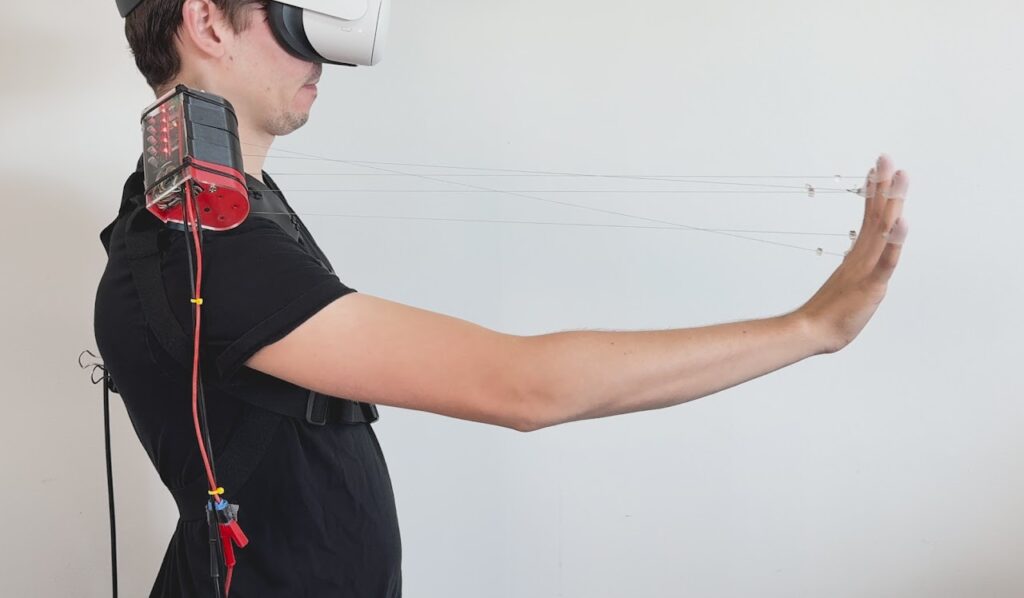
Nathan DeVrio and Chris Harrison from the Future Interfaces Group at Carnegie Mellon University have created one of the most elegant and cost-effective solutions to one of the common complaints with VR in the form of their Reel Feel haptic feedback device.

Virtual reality can be incredibly immersive, especially when paired with controllers and other accessories that let you manipulate your environment. But one complaint that users often report is the lack of tactility offered by current systems.

When you reach out toward an object or surface, the reality is shattered when you’re able to freely pass your hand through it like a ghost. Various commercial and research projects have attempted to solve this issue, but instead of burdening hands and fingers with sensors and feedback hardware, this system shifts the bulk of its weight to the shoulder, from which reels of string (hence the name) emit for each finger, attached via a silicone cap. This can then be used to produce object-based haptic feedback, for both rigid and compliant objects.

The Teensy 4.1-based prototype cost ~$240 in parts, 83% of which is from the brushless DC motors used to pull the strings. Scaled for mass-market production, the authors believe it might be possible to bring the cost below $100. See it in action in the video below, and check out the project web page for more info.

Handheld Lisp Computer

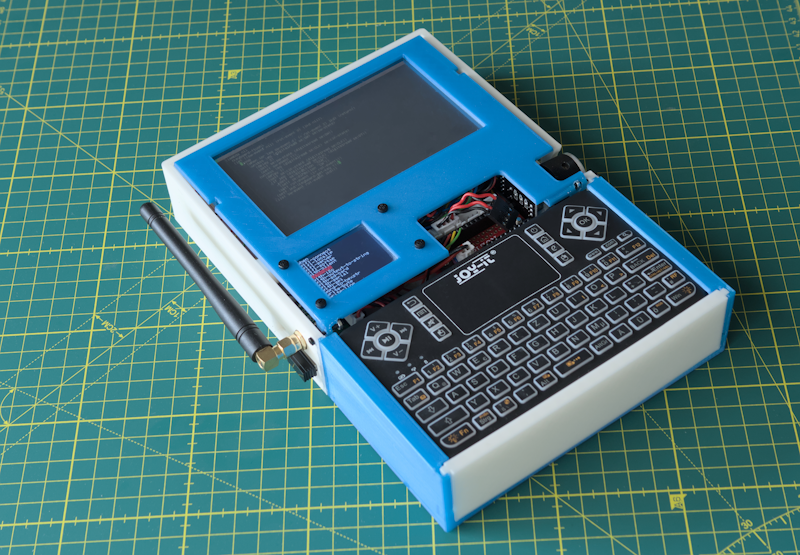
Gone are the days of needing a mainframe or even desktop computer to run your Lisp code, now you can use a handheld device complete with display and full keyboard and powered by a Teensy 4.1.

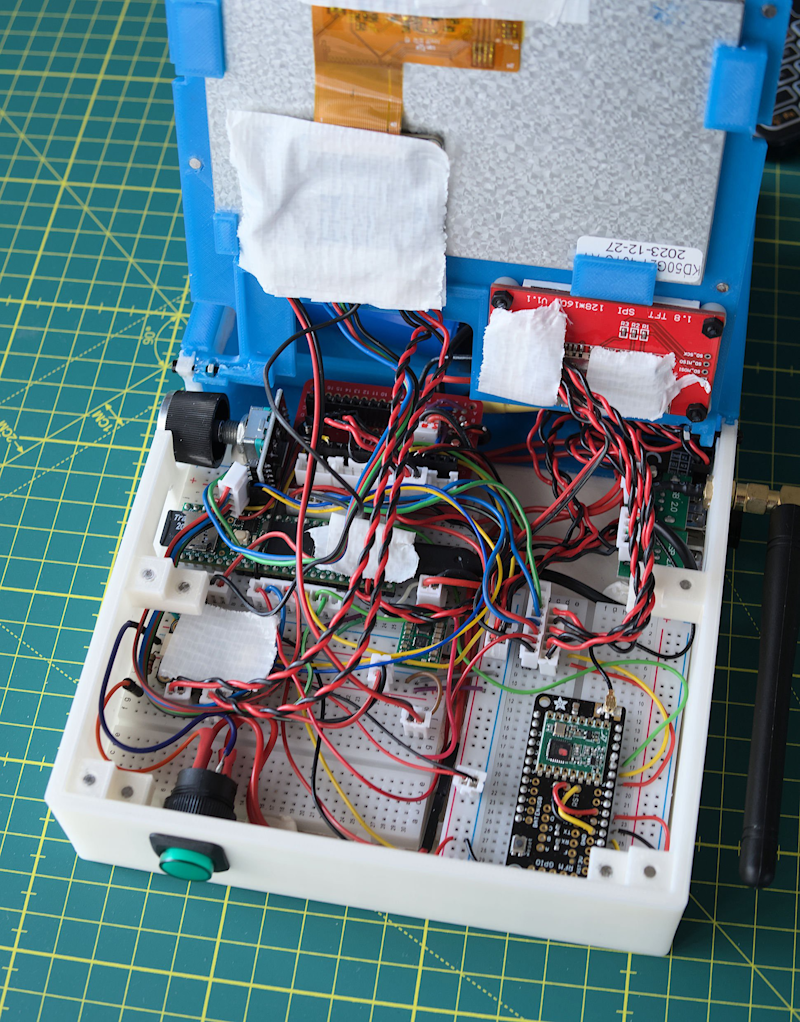
Unless you’re the lucky owner of one of those Cray-1 supercomputers that both runs Lisp and has built-in seating, you’re likely going to have to give in and get up to find the closest Lisp machine. Unsatisfied with this status quo, maker and microcontroller enthusiast Hartmut Grawe envisioned a new solution in the form of the LispDeck, a Teensy 4.1-based handheld cyberdeck that runs the microcontroller-optimized uLisp programming language. An RA8875-driven touchscreen and USB mini keyboard enable comfortable Lisp editing, with files saved and loaded from the Teensy’s SD card. A smaller 160×128 TFT screen and rotary encoder add “Lispy Little Helper” functionality to the editor, providing convenient access to the full list of uLisp symbols. RFM69 and ESP8266 modules provide LoRa and Wi-Fi respectively, with both programmatically accessible from the editor.

More detail can be found on Hackaday, with firmware and STL files on GitHub.

Vocoder – Voice of a Cylon

Mark “The Electronic Engineer” Donners, is back with a digital vocoder that make you sounds like a Cylon from Battlestar Galactica.

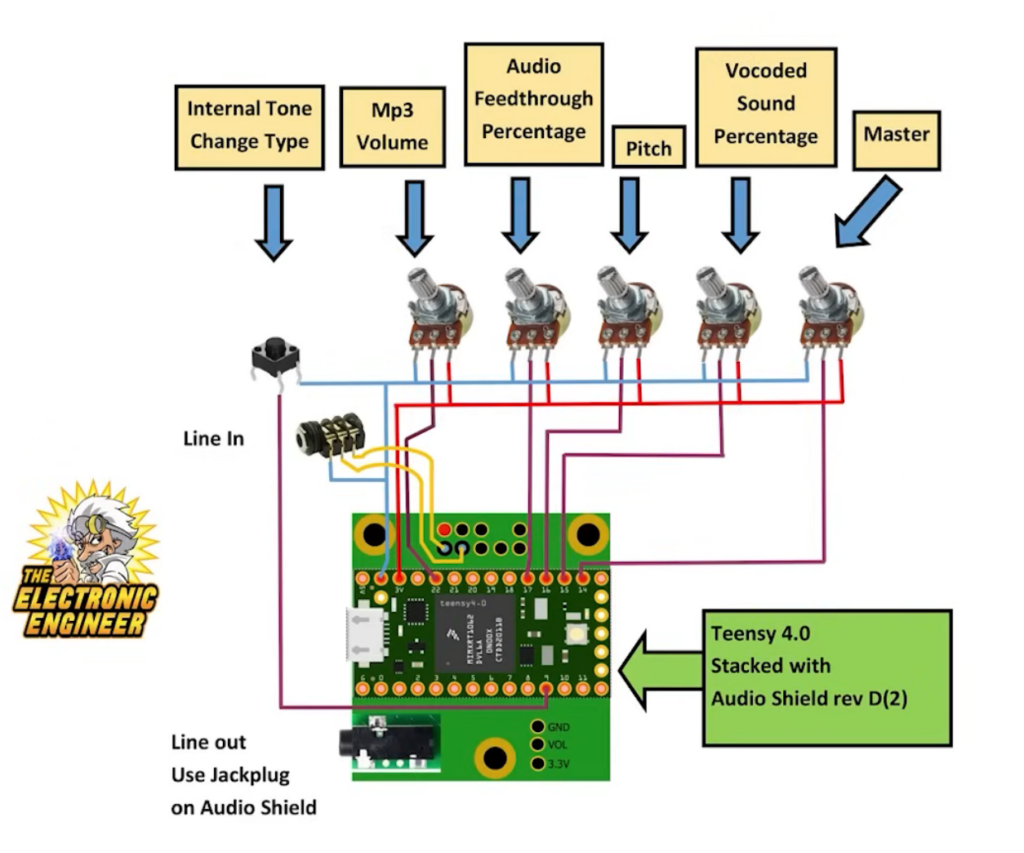
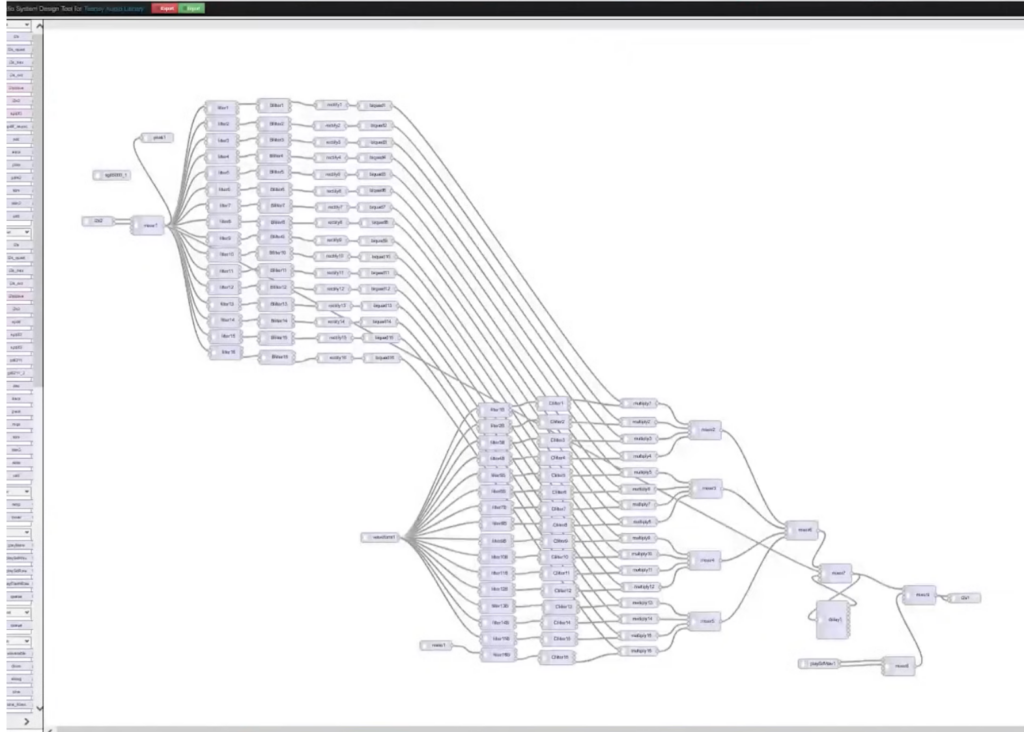
After presenting this impressive spectrum analyzer in his video, Mark reveals that he’s actually taking things in the opposite direction: using analyzed frequencies to create sound! Mark shows viewers how to wire up a simple circuit based on the Teensy 4.0 with Audio Shield, plus a few potentiometers, a button, and a 3.5mm TRS audio jack.

This is used to analyze audio data, and output a parallel signal based on that data, in the form of a vocoder, reminiscent of the 1978 Battlestar Galactica series’ Cylon characters. For completeness, Mark also added the sound associated with the Cylon’s Larson scanners.

The Teensy Audio Library is used, in simple terms, to rip apart the signal and build it up again.

More info, including a complete BOM, can be found on the episode page with downloads including the sketch at schematic available on the episode resource page.

You can follow along with the build and hear the project in action in this video.

We’ve perviously featured Mark’s work with a Spectrum Analyzer and VU Meter project.

Self-Stabilizing Pen

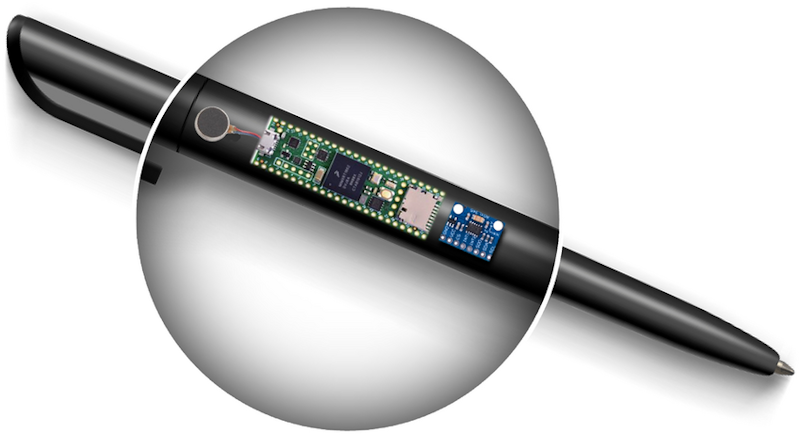
Researchers Jéssica Cristina Tironi, Anita Fernandes, Renata Coelho Borges, Luis Augusto Silva, and Wemerson Delcio Parreira have developed a prototype self-stabilizing pen that counters hand tremors in Parkinson’s patients.

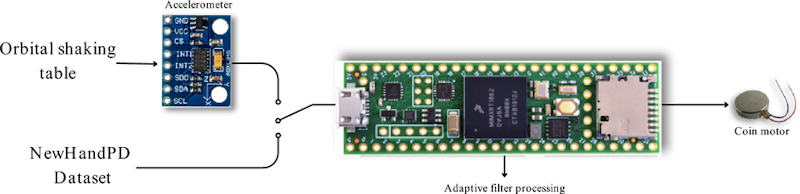
The system uses an Analog Devices ADXL345 accelerometer to monitor tremor oscillations, a Teensy 4.1 to analyze them in real time, and a vibration motor to dynamically counteract their effects. As seen in other tremor mitigation projects, a Kalman filter was employed to transform complicated data into useful outputs. While the initial prototype has provided encouraging outcomes, the researchers are considering adding additional sensors and further performance enhancements in a subsequent version. Dive into the original paper for more information.

Gesture Recognition with Electrical Impedance Tomography

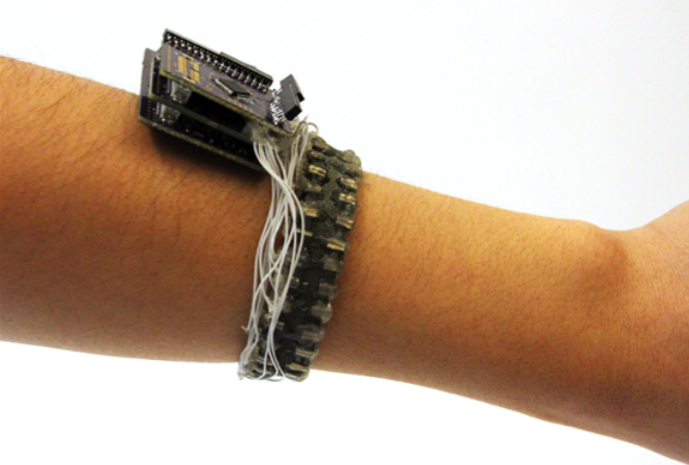
Yang Zhang, Robert Xiao, and Chris Harrison have used a Teensy 3.2 to explore Electrical Impedance Tomography (EIT) sensing schemes.

Expanding on research from a gesture-sensing smartwatch, the system can select between traditional two-pole sensing, where a single pair of electrodes act as emitter and receiver, or four-pole, where an AC signal is used to measure voltage between two pairs. Eight, 16, and 32-electrode configurations of each allow extensive experimentation to explore advantages and drawbacks to each.

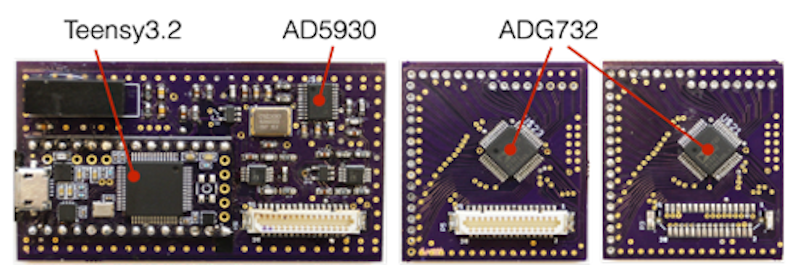
A custom PCB houses the Teensy 3.2, along with a voltage-controlled current source (VCCS), direct digital synthesizer (DDS) and ADC preamp, plus multiplexers to allow dynamic electrode schema selection. Find out more on Chris’s web site, check out the PCB on GitHub, read the research paper, or watch the video below.